Showing posts with label learning. Show all posts

Monday, July 4, 2011

Paving new pathways


The more I share about my own dark struggles with anxiety, the more people open up to me about theirs. Likewise, as I make progress, and live each day a little lighter, those same people have wondered aloud to me about it. What did you do? What do you do? How can I find what works for me, and let go of all this emotional sludge?

Well, I am not a therapist. I am just on a journey, maybe a bit like yours. I have no tricks, and no quick fixes. But I can share what I know, and what is working for me. Maybe it will work for you, too.

In a previous post, Unwritten, I wrote about my patterns of being worried, self-critical and defensive. These patterns, along with a generally pessimistic view of myself and my life, had become so ingrained, so part of my own self-concept, that I could barely even see them anymore. Later, in Practice, I talked about how, once a problem pattern is recognized, it is difficult to change, even when you want to. It takes daily effort, and can be a long and tiresome process. Both of these things are rooted in what we understand from basic neurochemistry.

How we learn patterns

Think of a piano student. This student has a new piece of music, and the first time she attempts to play the piece, many mistakes are made. It is slow and frustrating to get through the piece the first time. But if she keeps at it, and plays the piece again and again, and especially if she gives extra practice to those parts that are particularly challenging, the piece gets easier to play. As learning occurs, the student has to concentrate less and less, the piece sounds better and better, and playing the piece transforms from a difficult and frustrating experience, to a joyful one.

What we don't observe directly, is what happens in the pianist's brain. Brains are full of tiny neurons, that act like stepping stones in a pathway. Every time a path is followed, the electrical impulses in the brain actually cause the neurons to grow towards each other, as if the stepping stones are moved closer together. A substance called myelin also grows around neurons that are frequently used, making the impulses faster. Before we learn something, it is as difficult to follow the path as jumping from one far placed stone to the next, in heavy boots. It is slow, clumsy, and missteps are common. But as things are learned, those stones grow together, and soon it is like traveling an asphalt path in roller blades.

Unfortunately, this amazing, organic process is not only in place when we practice music. It is there when we practice anything. It is there when we practice putting ourselves down. It is there when we practice reacting in anger or fear. It is there when we practice blame, or perfectionism, or defeatist thinking. And sooner or later, our unhelpful patterns too become asphalt paths for our roller blades.

The helpful paths are not gone from our brains, but they are much harder to travel. The stones are far apart, and rough. That path is hard and slow-going. Left on automatic pilot, our brain will not choose to travel that path. Automatic pilot likes ease and speed. No, to find your way back to a helpful path will take effort, over and over. But each time you use the better path, you give it energy. Energy that it can use to grow, and get smoother. And the longer you ignore the old path, the more it will fall into disrepair.

This is not just a metaphor. Scientists have long known that brain tissue needs to be active to live. Neurons that are not used shrivel and die. As you build new pathways in your brain by consciously giving energy to a new way of thinking, the new path gets stronger, and the old path gets weaker. After a long time, the new way will be the faster pathway, and even old autopilot will choose it. But first you have to get there. You have to change your brain.

How we change patterns

Step 1 - Noticing
To shift your thinking from an old pattern to a new one, first you have to recognize what your old pattern is. One of my most pervasive patterns is that of self-critical thoughts, and that is the pattern I will be using in my example, but your unhelpful pattern may be different. Many people find it helpful to record the thoughts they are having during those times that they are feeling at their worst. As you record the thoughts and accompanying feelings, you can get an idea of where you need to focus.

It is important not to sugar coat your thoughts when you record them. For example, let's say I am driving, make some sort of error, and am suddenly feeling awful, anxious and ashamed. If I record the thought, "Gee, Lisa, you should really be more careful." I am not really being honest with myself about my inner voice. The statement, "You should be careful" would not elicit such strong feelings of anxiety or shame. It would be best to record as accurately as possible what I said to myself, and even try to capture the tone:

"Hey! What are you doing? Couldn't you see he was trying to make that turn? You totally cut him off! I can't believe you have your kids in the car and are driving like that. Just you wait and see, one of these days you will really cause an accident. Hurt your kids. Yep. What business do you even have behind the wheel?"

Wow. I am a meanie.

Can you see how those thoughts elicit those feelings of anxiety and shame? Of course I will feel anxious and ashamed if I think I am the worst driver and am going to wind up killing my own kids! The feelings and the self-talk usually match in intensity.

Step 2: Stopping
When you get a feel for your own voices, it is time to step up, and interrupt them. You make that traffic mistake, feel the anxiety, pay attention to what it was you were telling yourself, and just stop talking. Stop. Not another word. No. Some people visualize a giant stop sign, or say 'Stop' out loud to themselves. However you do it, just do it. You are not allowed to talk to yourself like that anymore.

Step 3: Restructuring
Now comes the rewrite. Question your own judgement. Does making that traffic mistake really mean you are an unobservant, rude, incompetent driver who deserves for her kids to die in a car accident? What would be a more realistic reaction? Practice saying that to yourself.

"You were distracted by your crying baby, and forget to shoulder check during that lane change. It is hard to ignore your own crying child, but accidents can happen on busy roads. You usually shoulder check. Remember to do it, even when it is loud in the car."

This is not about false optimism. You don't want to falsely congratulate yourself on your driving skills after an error. But take context into account. If you are usually a good driver, make sure to include that in your perception of events. One mistake does not a terror to the roadways make.

This is just one strategy to use when fighting the battle against anxiety and depression. It is not the only thing I have done, but it is probably the thing that has had the greatest impact. It is also not my own idea, but a simplified and adapted version of strategies conceived of and promoted by many therapists, based on the work of many researchers. Maybe it can help you. It has helped me.

drawings by Frits Ahlefeldt, and downloaded from:
http://www.publicdomainpictures.net/browse-author.php?a=1210
Thanks, Frits.

Wednesday, April 27, 2011

Multiple-component inset puzzles

I look at the title of this post and think, "Boy! That's a mouthful!" And I bet you are all wondering what the heck I mean, too. Let me explain.

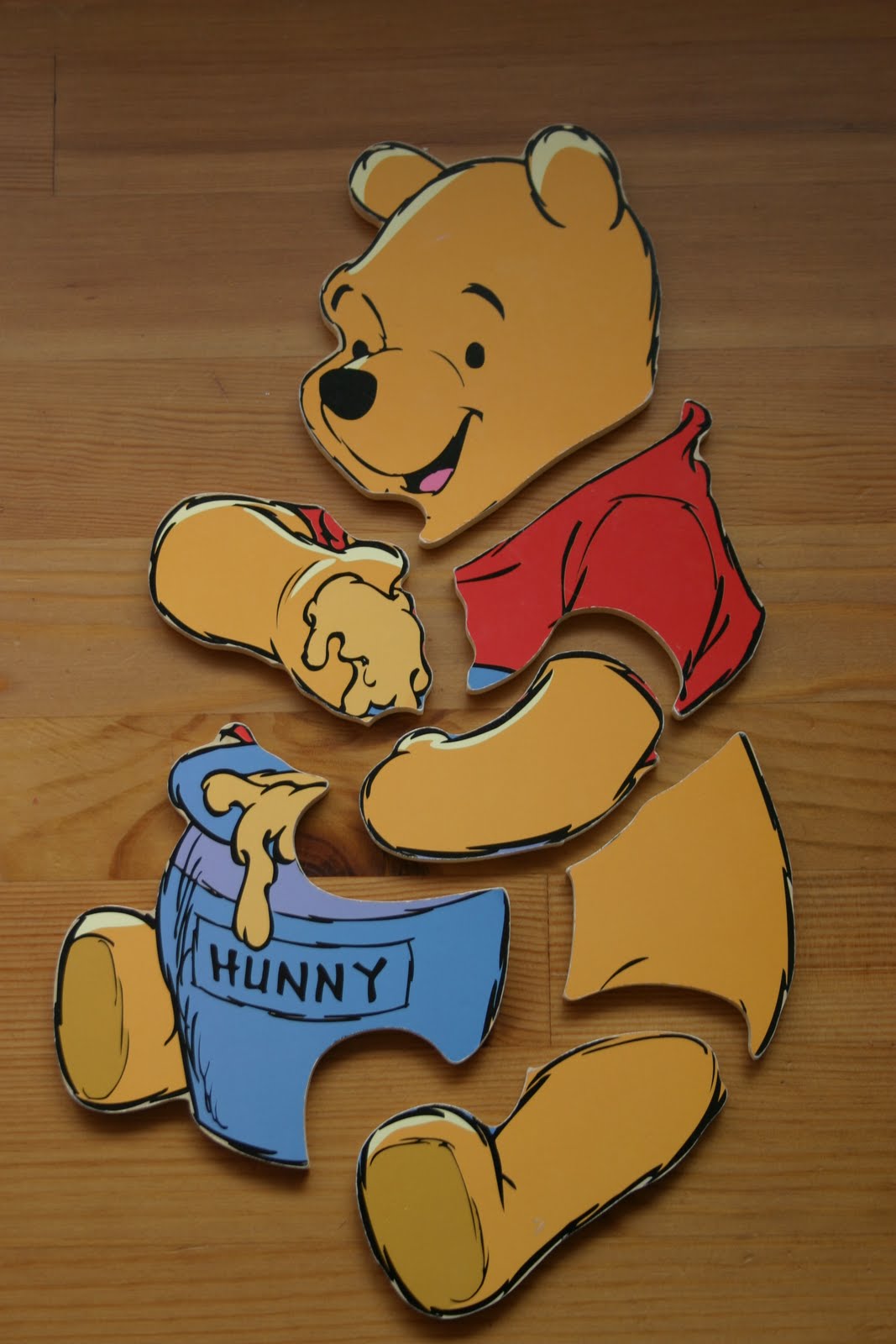
The peg puzzle we all know and love is also known as the single-component inset puzzle. The means a single piece fits in a single space in a board. The pieces are 'inset' in the board when the puzzle is assembled. The multiple-component puzzle just takes that difficulty level up a bit. Instead of a single piece per space in the board, there are multiple pieces that need to fit together in that space. And these pieces are not randomly divided, but are components of the whole. This piece is an arm, for example, and that piece is a leg.

With me so far?

This is really a case where a picture is worth a thousand words, so here is an example of what I'm talking about.

You can see how the pieces fit into a space in the puzzle board, like a peg puzzles, but the pieces all fit into the same inset space, instead of each having their own spot. The picture is broken apart in logical places, so that it is still fairly easy for the child to understand what each piece is - one piece is a leg, one piece is a head, etc.

Some of the ways to increase the difficulty of these puzzles are the same as for peg puzzles. A more difficult puzzle might have:
  • More pieces
  • Harder-to-fit pieces
  • More visually complex pieces or base
There are also a few new skills needed to do this type of puzzle. The first thing to consider, is that placed pieces are not obviously correct. Consider this: If you put a piece into a peg puzzle, it fits, or it doesn't, giving an immediate and concrete way to judge whether that piece is in the right spot. With a multiple component inset puzzle, you can put pieces into the board anywhere. Being able to fit them into the larger space is not proof that they are in the correct space.

For example, in the case of the 'Pooh' puzzle above, I might put an arm piece towards the bottom, leaving it in the space, but in the wrong spot. In order to determine if the piece has been placed correctly a measure of judgment has to come into play. You needs to start thinking about whether it looks right or makes sense, and this develops critical thinking skills.

Another new factor with multiple component puzzles is that the placed pieces will slide around until the puzzle is complete. It is easy to bump that first piece out of place when putting in the next piece. This adds a level of difficulty to the fine motor side of the task, and the child will learn to be more precise in their movements, a skill that will come very much into play when trying to line up the borders of jigsaw pieces down the road.

Multiple-component inset puzzles are excellent, but unfortunately they are much harder to find than the common peg puzzle. Fisher-Price made several in the 70s and 80s, so keep your eyes open at garage sales and thrift stores. That is where I have found all of mine!


If you can't find them, I know that Melissa and Doug make a few, but some are designed with speakers that play a noise when the puzzle is complete, which I personally find obnoxious. I have also seen puzzles of this type that are made of plastic in themes of popular children's tv characters (Barney, Blue's Clues, Disney characters, etc). A word of caution on the plastic puzzles - the pieces are quite light, and get bumped out of place VERY easily, which can be frustrating for a child who is learning. If you can, stick with wood, or at least introduce some wooden ones first, to avoid making it too hard, too fast.

Next post... Frame puzzles!

Thursday, April 21, 2011

Peg puzzles

When it comes to teaching puzzle skills, exploratory learning is best. You want to be able to provide your child with puzzles that he can do, and slowly increase the difficultly as he learns. But puzzle difficulty can vary along a number of aspects. One 8 piece puzzle is not automatically equal to another. To illustrate what I mean, let's look at peg puzzles first.

Children are often introduced to this type of puzzle at a young age. The single inset, or peg, puzzle is made up of pieces that each fit into their own hole in a board, usually made of wood. The youngest "puzzler" might start with a puzzle of 3-5 pieces, with easy to grasp handles. For first puzzles, it is best if the picture of the piece is printed in the hole where it belongs, as in this photo:

The "vehicles" puzzle above works on matching, planning and fine motor skills, each at an easy level. The pictures on the pieces are nearly identical to those in the spaces. There are only four pieces, and the pieces are easy to handle, fitting easily into the frame.

The difficulty of a puzzle can be increased by many factors. The difficulty level of the matching skill is one of the main ways. In the puzzle above, you needed to match nearly identical pictures. To complete some puzzles you may need to match a piece to a blank spot. In that case, all you have to go on is the outline, such as in the puzzle below.

In the number puzzle below, it is even more difficult, because the picture printed in the space is different from the one printed on the puzzle piece.

To complete this puzzle, you either have to match the outline to the piece, ignoring the distraction of the picture in the space, OR understand the concept that the digit goes with the amount, a much higher level matching skill.

Matching can also become more difficult if the pieces look the same. We all have experienced this when trying to sort out the endless sky of a large jigsaw puzzle, but it holds true for peg puzzles, too. If the puzzle pieces are similar to each other like the "3" and "8'"above, they will be easier to mix up, and you have to pay more attention to the details.

If the background of the puzzle is printed, that can also make the puzzle harder. To understand why, compare the two puzzles below. Suppose you had to put the lion piece back. Both pieces have the matching picture printed in the correct space, but with the puzzle on the right that space is harder to find, because there is just so much more to look at.
Finally, consider also how many pieces are in the puzzles you are providing, and how easy the pieces are to replace. Increasing the number of pieces not only increases the number of steps in the task, but also increases the potential for error. It is similar to increasing the options on a multiple choice test. Selecting the correct answer from 3 options is simpler than selecting the correct answer from 8 options. Also, if the puzzle pieces are harder to replace, more finely tuned motor skills are required, and more persistence, as well.

Peg puzzles are a common toy, but certainly not the only kind of puzzle on the way to learning the skills for jigsaws. In fact, you can begin to introduce easy versions of other kinds of puzzles before your child has completely mastered the more difficult peg puzzles, just for variety. In my next post I'll talk about another option for the toy shelf - the multiple-component inset puzzle.

Friday, April 15, 2011

Choosing puzzles

Working on puzzles is fantastic brain-work for your child. Doing puzzles builds colour and shape awareness, and sharpens visual skills such matching, sorting, and spatial reasoning These are skills that are invaluable for both math and reading. Additionally, working on puzzles encourage characteristics that children need to succeed at academics, such as persistence, on-task behaviour, and the ability to problem-solve.


I know puzzles have been criticized because they are a 'closed end toy' - there is only one right answer. The argument is that puzzles are not good because they do not encourage creative thought. If puzzles were the only plaything you provided, I could see how that might be a problem. However, if puzzle work is balanced with creative opportunities, they can enrich thought processes. After all, consider math, reading or spelling. There are many times where there is only one right answer.

Unfortunately, many children don't choose to play with puzzles, often because of a mismatch of puzzle difficulty to child ability. Think about it. If the puzzles in your home are too easy for you, they are boring to play with, and you won't pick them up. If the puzzles are too hard, you may just give up trying. The key is to please Goldilocks, by offering the puzzles to your child that are 'just right'. But how do you know which puzzles are right?

I will post about five kinds of puzzles, listed here from simplest to most complex:
  1. Single-inset or "peg" puzzles
  2. Multiple-component inset puzzles
  3. Frame puzzles
  4. Juxtapose puzzles
  5. Jigsaw puzzles
Most children can learn the skills they need to do all these kinds of puzzles just through exploration and experimenting. The key is to ensure that the puzzles they are exposed to increase in difficulty gradually - enough to challenge, but not so much as to discourage.

It is amazing how complex puzzle selection can be. When I am done, I am willing to bet you will never look at children's puzzles the same way again. Stay tuned!

Sunday, February 27, 2011

Unwritten


Like so many, I have grappled with the dark shadows of anxiety and depression. Mine has been a conscious struggle for nearly ten years now, but if I look back into my childhood, I can see it there, too. The over-thinking, the desperate grabs for approval, the belittling self-talk... It has been a part of me for as long as I can remember.

Transitions have always been my weak spot. One of my most difficult times, and the first time that I really began to have any awareness of my own tendencies towards anxiety, was when I graduated from high school and entered first year university. Everything was going well. I was a good student, and had made one or two friends. I lived comfortably at home with my parents and siblings, had a good relationship with my boyfriend, held down a part-time job... On the surface, everything was functional and fine, and yet I experienced rib-cage-crushing chest pain every time the bus I was riding pulled up to the university campus.

Change. That was all it was.

I struggled significantly again when I got married, and again when my son was born. Always appearing to be fine, to have it together, and yet, I was frozen with worry, exhausting myself with circular thoughts, and berating myself for any and all failure to adhere to my own set of rules of how things should be. Desperately trying to organize my life back under control.

During my last round of counseling, I was taken aback when I realized that I was comfortable making myself miserable. It is not that I enjoy being worried, self-critical and defensive, but these things are so familiar to me. They are patterns that have become so much a part of who I am that when we talked about leaving them behind, I got quite emotional. Feelings of fear and grief swelled up inside of me. Change these things? How could I? It would be like letting a part of myself die! And who would I be without them?

Who, indeed. When therapists ask me to describe myself, I usually tell them whatever my mother or sister or grade school teacher has told me about myself. Somehow, borrowing other people's words feels more accurate than anything I could come up with myself. But I don't report everything I have been told, rather, I will sort through my memories for those descriptions that I feel are most accurate. Loud? Yes, that seems right. Difficult to get along with? I can buy that. Over-dramatic? Sure. But say someone describes me as reliable? I will immediately remind myself of all the times in which I have been unreliable, and 'reliable' doesn't make the cut.

I recently started seeing a therapist again, to help me through the transition from 'working mom of one' to 'at-home mom of two'. This therapist is truly a woman after my own heart; always giving me new things to read. The book, 'What Happy People Know' by Dan Baker, has been my favourite suggestion so far, but I have also learned much from 'The Six Pillars of Self-Esteem' and a chapter of 'Change your Brain, Change your Life'. The writers of these books have given me new insight into my own messy head.

Calling up every negative thing anyone has ever said about me, along with evidence to support their statements, comes ridiculously easy to me. It is a very established thought pattern, and my brain is very good at it after a near lifetime of practice. Remembering positive descriptors is harder, and any that I do recall, are so easy to discount. I am beginning to understand that it all comes down to my self-concept; the way I write my own story. It works like this: If I believe I am 'bad', then descriptions in line with that belief seem correct. Descriptions to the contrary are incorrect, clearly the result of someone else's generosity, or not knowing me well enough. Evidence supporting the 'truth' is remembered. Any evidence contradicting it is dismissed as being a rare exception.

In actual fact, I may be reliable far more often than I am unreliable. I may be even-tempered far more often than I am overly dramatic. But what I believe about myself has not been based on facts, or numbers, or really anything rational. It has only been based on an old, bad story of me.

I am feeling more open to change, these days. It would not be so awful to drop 'neurotic' from my own self-concept. I am ready to give up my old habits, and pave some new roads. And I am trying to let go of the old stories of 'bad' me, even though I don't know who I will be without them.

Today is where my book begins. The rest is still unwritten.

Wednesday, April 14, 2010

Homeschooling myself

Wikipedia describes Leonardo da Vinci as "a painter, sculptor, architect, musician, scientist, mathematician, engineer, inventor, anatomist, geologist, cartographer, botanist and writer". I have heard it said that he was the last person to really know everything that was known, and that after that, humankind simply had more knowledge than any one person could learn in a lifetime. I wonder if that's true.

I was really lucky to grow up with a good education. I got all the regular preschool to Grade 12 stuff, and then went on to get my university degree. I also took gymnastics, karate, CPR, learned to play the saxophone, got a lead role in a school play and was on class council and student councils. I was a good student, always putting an uncool amount of effort into everything I did.

When Nik was born, a sort of unconscious shift occurred. It isn't that I gave up the uncool amount of effort. That is too deeply ingrained. I just started to direct all that effort toward Project Nik. I was so baby-busy, I felt like I had no time for any of the things I did before he was born. I still made some time for reading and taking classes... But I read parenting books, and took "Mom 'n Me" classes. By the time that Nik was about 6 months old, I was focusing so completely on his development, that it had totally eclipsed my own.

Someone handed me a baby, and I lost my balance. I thought that being a good mom was abandoning myself, and pouring all of myself into my child, and I'm slowly realizing that lack of wisdom in that. If Nik had been my second child, I would not have abandoned the first to take care of him. I would have found a balance between the needs of the two. Why should it be any different if my first "child" is myself? My own growth is still worthwhile.

Additionally, putting all my effort into my child at the expense of myself not only devalues me, it devalues the contributions of all the people who have put effort into me in the past, like my teachers and parents. It also places an insane amount of pressure on my two year old to perform, to "turn out". I am, after all, putting all of my proverbial eggs in one basket.

As part of my parenting reading, I've learned about homeschooling, and felt the attraction. I have also seen that it is not confined to the traditional grades of K to 12. Some people talk about homeschooling their toddlers, for example. One day, I thought: "Is there any reason I couldn't homeschool myself?"

Think about it. Who says education past the age of 18 has to occur within the walls of a college or university? Why couldn't I design my own emergent curriculum, based on my interests, and make it a priority?

I struggle with feeling like the things I do for myself are frivolous, and only deserve to be indulged in when everything else is finished. Thinking about it as homeschooling validates the effort I put into my own development, and encourages me to create a balanced curriculum.

What subjects would you be sure to include? I am thinking of yoga for my first Phys. Ed. unit, creative writing for English, maybe collage for Art... I'd like to learn to get my finances under control for Math, learn the chemistry behind vegetable gardening for Science, and begin to make sense of nutrition as part of Health.

I am not planning on adding cartography or engineering just yet, but even da Vinci had to start somewhere.

Sunday, November 15, 2009

Montessori at our house

As part of my work responsibilities, I started visiting a local Montessori preschool last spring. Everything about the environment appealed to me: the soft, solid colours, the art on the walls, the entire airy, organized space. The children in the school were calmer and more self-controlled than any of the children I had witnessed as other preschools and daycare centers I have visited. My interest was peaked, and my natural inclination for research took over. I had to learn more about this.

Previous to this experience, the only thing I knew about Montessori school was that Anne Frank had attended one. We read her famous diary in English in junior high, and I remembered that she had to leave her beloved Montessori school to attend a Jewish school when the Dutch segregation began. After learning about the Montessori method, and seeing the difference in approach and its resulting effect on the learning atmosphere, I can understand why Anne saw the change as a loss.

After months of research through books, magazines, blogs, websites, and even YouTube videos, I have slowly brought some Montessori-inspired changes into our home. The Montessori idea that has most resonated with me is one of the Prepared Environment. That basically means making a child's environment accessible to him by using low cupboards, shelves, and child-size furniture and tools. Making these modifications to my home has been a labour of love, and I am delighted to share them with you.
This first modification is something many families may have in their home, but definitely is in line with the idea of the Prepared Environment. Nik is able to take out and put away his own jacket and shoes, thanks to a Shaker-style peg rail I picked up at the local thrift store.

Adding a Rubbermaid foot stool to our livingroom has made the space much more functional for Nik. He can use it with the coffee table for snack, or playing with table top toys.

It is also so lightweight, that he can move it around himself to explore or access things that are otherwise too high for him to reach. Here he is standing over our cabinet stereo, watching the cd in the cd player spin.

More involved changes have been things like Nik's kitchen cupboard.All of the child size dishes and cutlery can be found here, organized and ready to use or explore. Favourite things included in this cupboard are
Child-size metal cutlery in a miniature cutlery tray, and A stoneware creamer used for pouring as a child-size pitcher.

Both the cutlery tray and the creamer were thrift store finds. I have yet to order even a single item from the high-priced Montessori supply catalogues.

I have saved my very favourite home Montessori spot for last: our mini-classroom. Against one wall in my small home's very small office, we have this area:
It consists of a child-size table and chair, bulletin board at child-eye level, drawers for art supplies and an open shelf of table tasks. Based more on what I have seen at the local Montessori preschool than what I have read in books, this area is designed so that Nik can choose his own task, and bring it to the table to work on.

He loves his "desk". My husband and I both have desks in this room, too, so it is satifying to him that he has not been left out, I think. His current favourite 'work' is a toss up between pressing alphabet cookie cutters into homemade playdough, and stringing buttons on shoelaces. See photos below for a few more details of this space.

Playdough and accessories.

Work shelf with stringing beads, buttons, puzzles, hammer toy, alphabet desk and peg board.
Related Posts Plugin for WordPress, Blogger...